
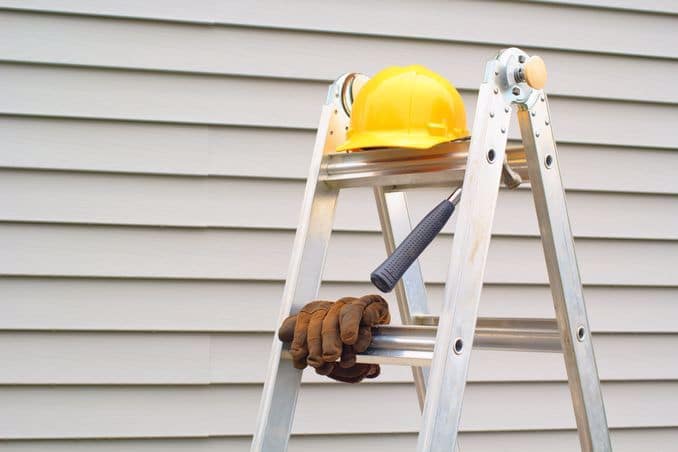
Ladders are among the essential means that are used to reach high places in many environments, such as homes, workplaces, and construction sites. Despite their simplicity, using ladders in an unsafe manner may lead to serious accidents and severe injuries. Therefore, following safety guidelines while using ladders is considered a necessary matter to protect individuals and ensure their safety.
Statistics indicate that a large percentage of accidents in workplaces and homes result from falling from ladders. These accidents range between minor injuries and serious fractures, and may lead to death in some cases. Therefore, following safety guidelines significantly reduces the risks of these accidents.
#Types of Ladders According to OSHA Standards:
📌 First: Ladders by Structure
Fixed Ladders
Permanently connected to a specific structure (such as tanks, silos, or towers).
If the height exceeds 24 feet (approximately 7.3 meters), a means of protection must be used, such as: Fall Arrest Systems, or Caged Ladder.
Portable Ladders Which include:
Straight Ladders
Step Ladders
Extension Ladders
Combination Ladders
📌 Second: Ladders by Function
Industrial Ladders: Used in work sites, and are durable and withstand intensive use. They have weight classifications according to the type of work (light, medium, heavy).
Access Ladders: Used to access high places such as roofs or machines.
Emergency Ladders: Used for escape or evacuation during a fire or emergency. They are often fixed and lead to a safe exit.
📌 Third: Classifications According to OSHA for Load Type
Ladder Type | Classification Symbol | Maximum Load (in pounds) | Use |
|---|---|---|---|
Extra Heavy Duty Ladder | Type IAA | 375 lbs | Severe industrial use |
Heavy Duty | Type IA | 300 lbs | Constructions |
Medium Duty | Type I | 250 lbs | General industrial use |
Light Duty | Type II | 225 lbs | Commercial use |
Household Duty | Type III | 200 lbs | Light household chores |
Safety while using ladders is among the vital matters that the Occupational Safety and Health Administration (OSHA) emphasizes, in order to reduce the risks of falls and injuries. The following are the most important safety requirements when using ladders according to OSHA standards:
#✅ General Requirements for Using Ladders According to OSHA:
Choosing the Appropriate Ladder:
The appropriate ladder for the purpose must be used, in terms of length and type of use (e.g., fixed ladder, portable ladder, folding ladder, etc.)
The ladder must be in good condition and free of defects.
Angle of Inclination: Portable ladders (such as ladders based on a wall) must be placed at a correct angle of inclination: every 4 feet of height corresponds to one foot away from the wall (4:1 ratio).
Periodic Inspection: Ladders must be inspected before each use to detect any damage or defect. The use of damaged or broken ladders is prohibited.
Securing the Ladder: The ladder must be secured well to prevent slipping or movement during use. It is preferable to use fasteners or tie the ladder from the top.
Using the Hands: The hands must be used to hold the sides of the ladder while ascending or descending. It is not permissible to carry tools or materials when ascending; a tool bag or rope should be used to pull them.
Standing on Safe Steps: One should not stand on the top three steps of a free-standing ladder. The height that the worker reaches should not exceed the safe point of the ladder.
Avoiding Exceeding the Permissible Load Limit: The maximum permissible weight for each type of ladder must be observed.
Work Environment Around the Ladder: The ladder must be kept away from doors that open towards it. It is not permissible to use the ladder on uneven or slippery ground without securing it.
#🚫 Prohibitions During the Use of Ladders According to OSHA:
It is not permitted to place the ladder in front of a door that opens in its direction without securing it.
It is not permitted to modify or repair the ladder in an unapproved manner.
The ladder must not be used as a bridge or platform.
The ladder must not be used if weather conditions (such as winds or rain) pose a hazard.
#🛑 Safety During Hot Work Inside the Work Site
Introduction
In industrial or construction work sites, hot work (such as welding, cutting, grinding, or using torches) is among the activities that involve high risks. If appropriate safety procedures are not followed, these works can lead to dangerous fires or explosions that may threaten lives and property.
In this blog, we highlight the most important safety practices that must be followed when performing hot work inside work sites.
#🔥 What is Hot Work?
Hot work is any activity that results in sparks, open flames, or high temperatures that may ignite flammable materials in the work environment. Examples include:
Welding
Cutting with flame or electric wheels
Using torches
High-speed metal grinding
#✅ Basic Safety Procedures
Hot Work Permit An official permit must be issued before starting any hot work. The permit includes specifying the type of work, timing of execution, and required prevention measures.
Site Inspection
Remove or protect any flammable materials in the vicinity of the work (within approximately 11 meters).
Ensure that fire extinguishers are nearby and ready for use.
Good ventilation to prevent the accumulation of flammable vapors or gases.
Personal Protective Equipment (PPE)
Wear safety glasses, heat-resistant gloves, and a helmet.
Use a welding shield or special mask depending on the type of work.
Presence of a Fire Watch A trained person must be present to monitor the work site during the process and for at least 30 minutes after its completion, in order to deal immediately in the event of a fire.
Training of Workers Hot work must not be carried out except by well-trained employees who are aware of the risks of these activities and how to deal with them.
#🧯 What do you do in an emergency?
Stop work immediately if you notice abnormal smoke or the start of a fire.
Use the appropriate fire extinguisher quickly.
Follow the evacuation plan specified for the work site.
Immediately inform the safety or emergency department.
#📝 Conclusion
Safety during hot work is a collective responsibility that begins with good planning and ends with safe execution. Adherence to safety procedures not only protects individuals, but also maintains the continuity of work and the safety of facilities.
Always remember: "Safety first... no work is worth risking your life for."
#Safety in Using Ladders in Work Sites
Ladders are among the most used equipment in work sites, whether in construction sites, factories, or even in administrative offices. Despite their simplicity, improper use of them can lead to serious accidents and severe injuries. For this reason, it is necessary to promote a culture of safety when using ladders, and to follow proper procedures to protect oneself and colleagues.
#Why Are Ladders a Source of Danger?
Ladders may seem like simple tools, but they are responsible for a large number of occupational accidents annually. The most prominent risks associated with them include:
Falling from a height
Slipping due to wet or uneven surfaces
Collapse of the ladder due to a defect in the installation or a defect in it
Collision with tools or equipment while ascending or descending
#Basic Safety Procedures When Using Ladders
Inspect the Ladder Before Use
Make sure that the ladder is in good condition, without cracks or deformations.
Check for rubber feet at the bottom of the ladder to prevent slipping.
Do not use damaged or unstable ladders.
Place the Ladder Correctly
The ladder must be on a stable and non-slippery surface.
For inclined ladders, use the 4:1 rule (for every 4 meters of height, the base should be one meter away from the wall).
Secure the ladder or have someone hold it when in use if necessary.
Ascend and Descend Safely
Always face the ladder while ascending or descending.
Use both hands for a good grip.
Do not carry heavy tools while ascending. Use a tool belt or rope to pull equipment after arrival.
Do Not Exceed the Upper Limit
Do not stand on the top three steps of the inclined ladder.
Do not extend your body sideways excessively. Move the ladder instead.
Training and Awareness
Ensure that workers receive appropriate training on the use of ladders.
Organize periodic awareness workshops to promote a culture of safety in the work site.
#Safety is Everyone's Responsibility
Paying attention to small details such as using ladders in a safe manner can prevent major accidents. Always remember that your safety and the safety of your colleagues begin with making the right decisions in every situation, and practicing work professionally and consciously.
#Risks of Slipping, Tripping, and Falling at the Workplace: Safety is Our Shared Responsibility
Accidents resulting from slips, trips, and falls are among the most common accidents in workplaces around the world, and may lead to serious injuries or even deaths. Although they seem simple, their consequences can be serious for both the employee and the employer.
#What Are the Causes of These Accidents?
Most cases of slipping, tripping, and falling occur due to:
Slippery surfaces such as wet, painted, or oil-covered floors.
Obstacles in corridors such as scattered wires, or untidy tools.
Poor lighting that hinders the vision of obstacles.
Failure to use appropriate personal protective equipment.
Neglect to clean spills immediately.
[Image illustrating common slip, trip, and fall hazards and prevention methods in a workplace]
#What Are the Possible Consequences?
Physical injuries: such as bruises, fractures, head or spinal cord injuries.
Financial losses: whether from treatment costs, workers' compensation, or cessation of work.
Decreased productivity as a result of the absence of injured employees.
Damage to the company's reputation in the event of repeated accidents.
#How Can These Accidents Be Prevented?
Maintaining site cleanliness and cleaning spills immediately.
Placing warning signs in wet areas or areas under maintenance.
Tidying tools and wires and not leaving them in walkways.
Ensuring good lighting throughout the workplace.
Training employees on safety and encouraging them to report hazards.
Wearing appropriate footwear with slip resistance.
#Conclusion
Safety is not just rules written on walls, but a culture that must be established among all workers. Through awareness and adherence to preventive measures, we can significantly reduce slip, trip, and fall accidents, and ensure a safe work environment for everyone.